PDLC Smart Film Preparation, Installation and Power Supply
A smart film system consists of three parts: a PDLC power supply (transformer), a controller and the PDLC film itself. Here we explain how the film is prepared for installation, how it is applied to glass, how it is connected to power and how it is controlled.
Wiring diagram
The power supply converts standard 220 V mains voltage into the appropriate voltage for the PDLC film, while the controller makes it easy to switch the system on and off.
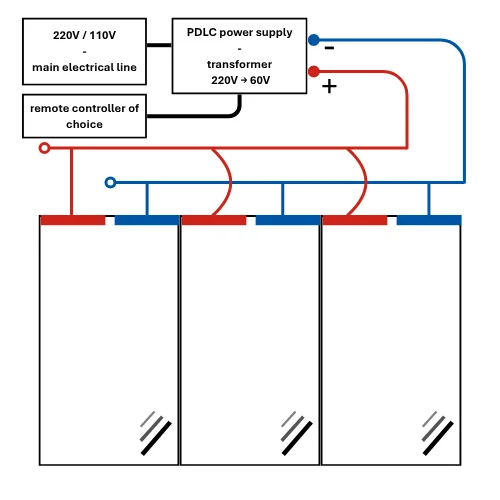
One suitable PDLC power supply can, depending on its power rating, be connected to one or more glass surfaces. All film on the same system switches on at the same time, and with the right configuration separate controllers can also be used for individual surfaces.
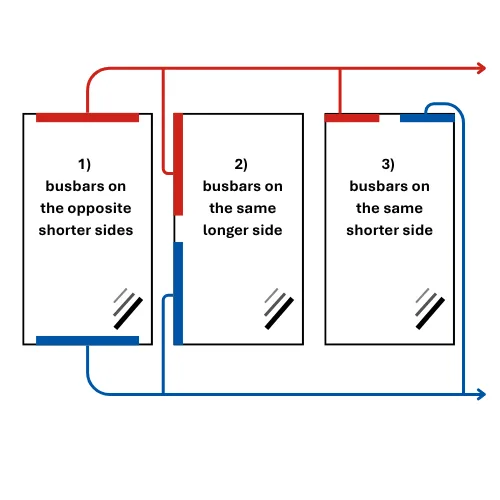
The diagram shows the basic way of connecting the film. The layout and preparation of the busbars can always be adapted to the installation site.
Busbars
Busbars are the main contact between the PDLC layer (the one with the crystals) and the electrical current. Two poles are always prepared on opposite faces of the film. It does not matter which side is positive and which is negative — what matters is that a continuous current flows through the film. Preparation takes three steps:
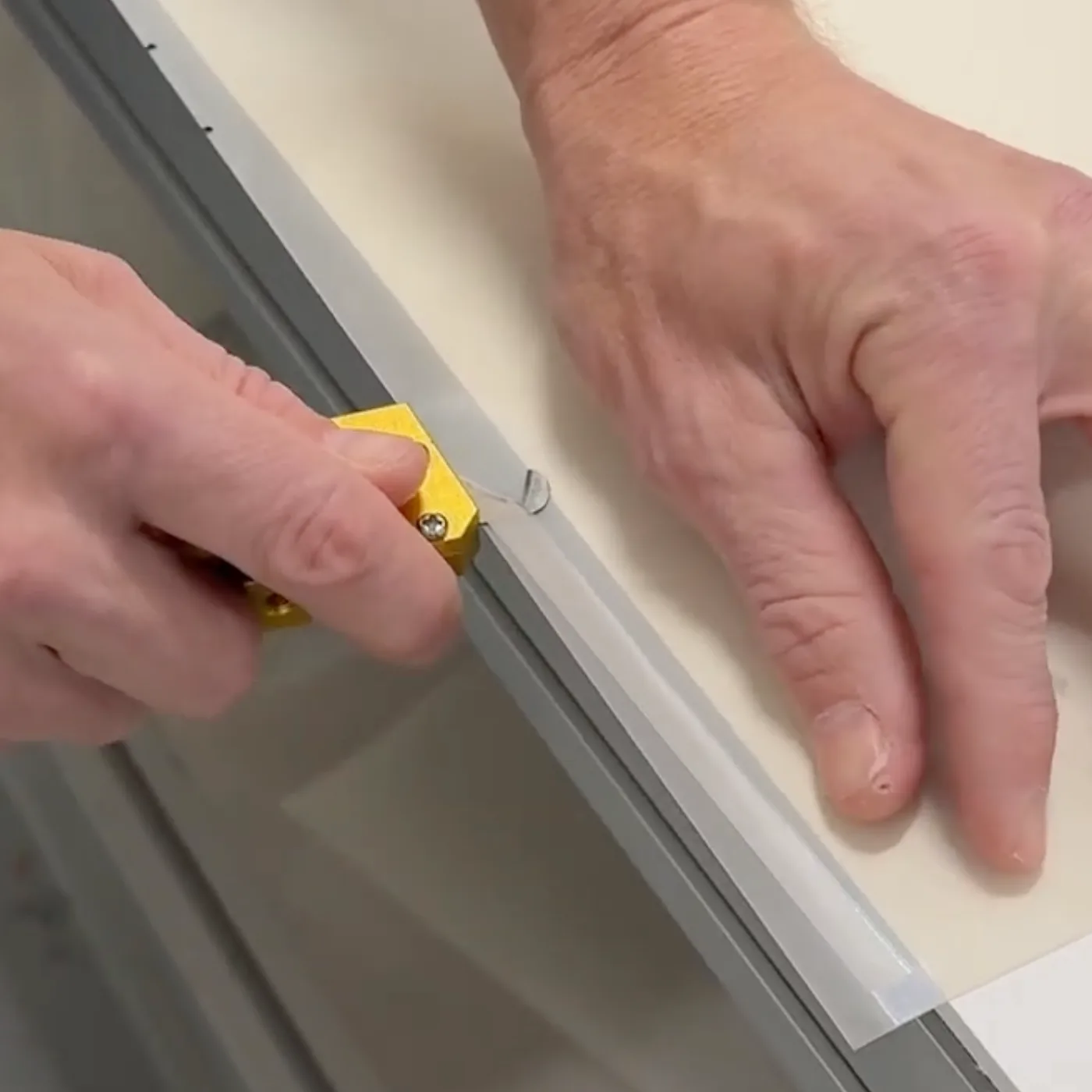
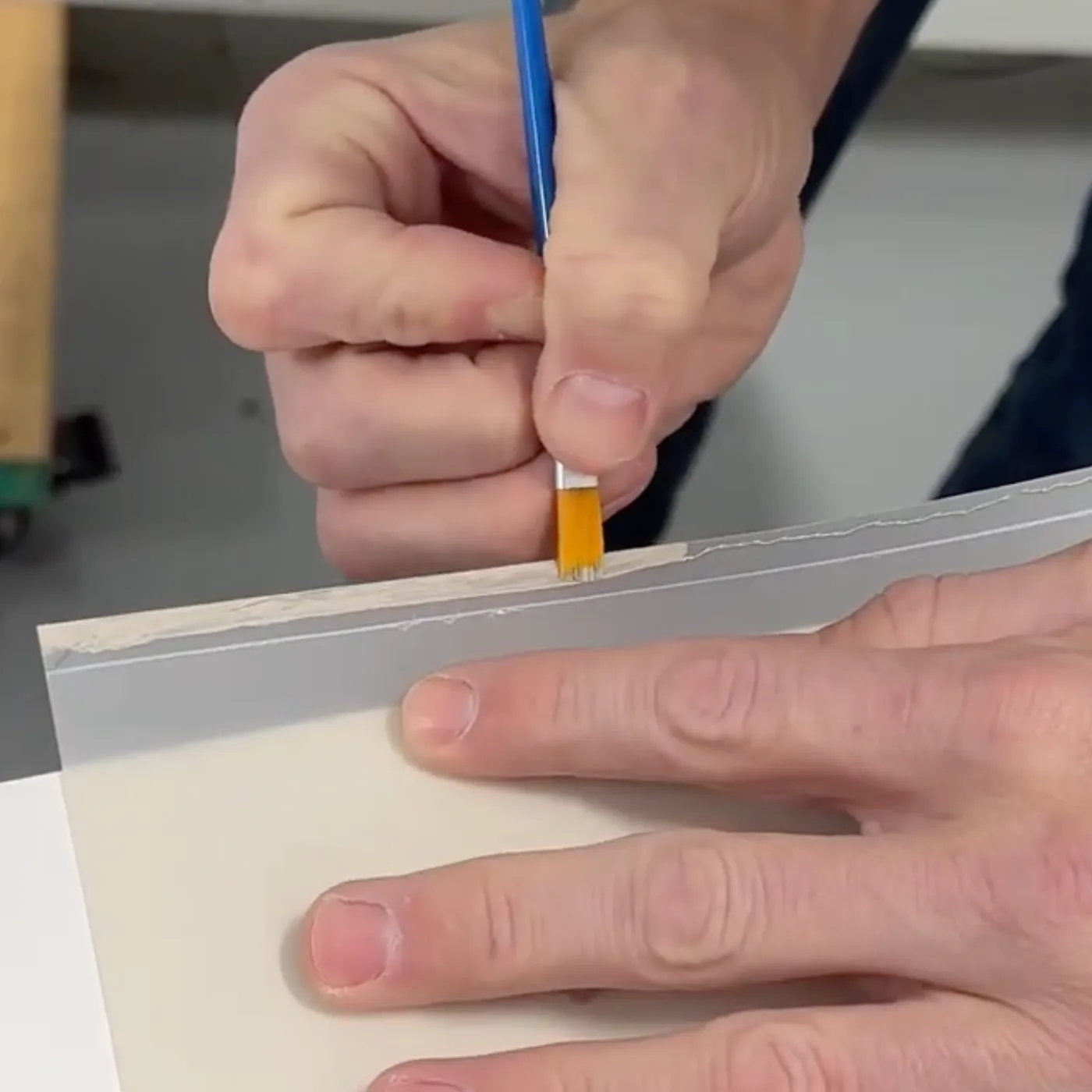
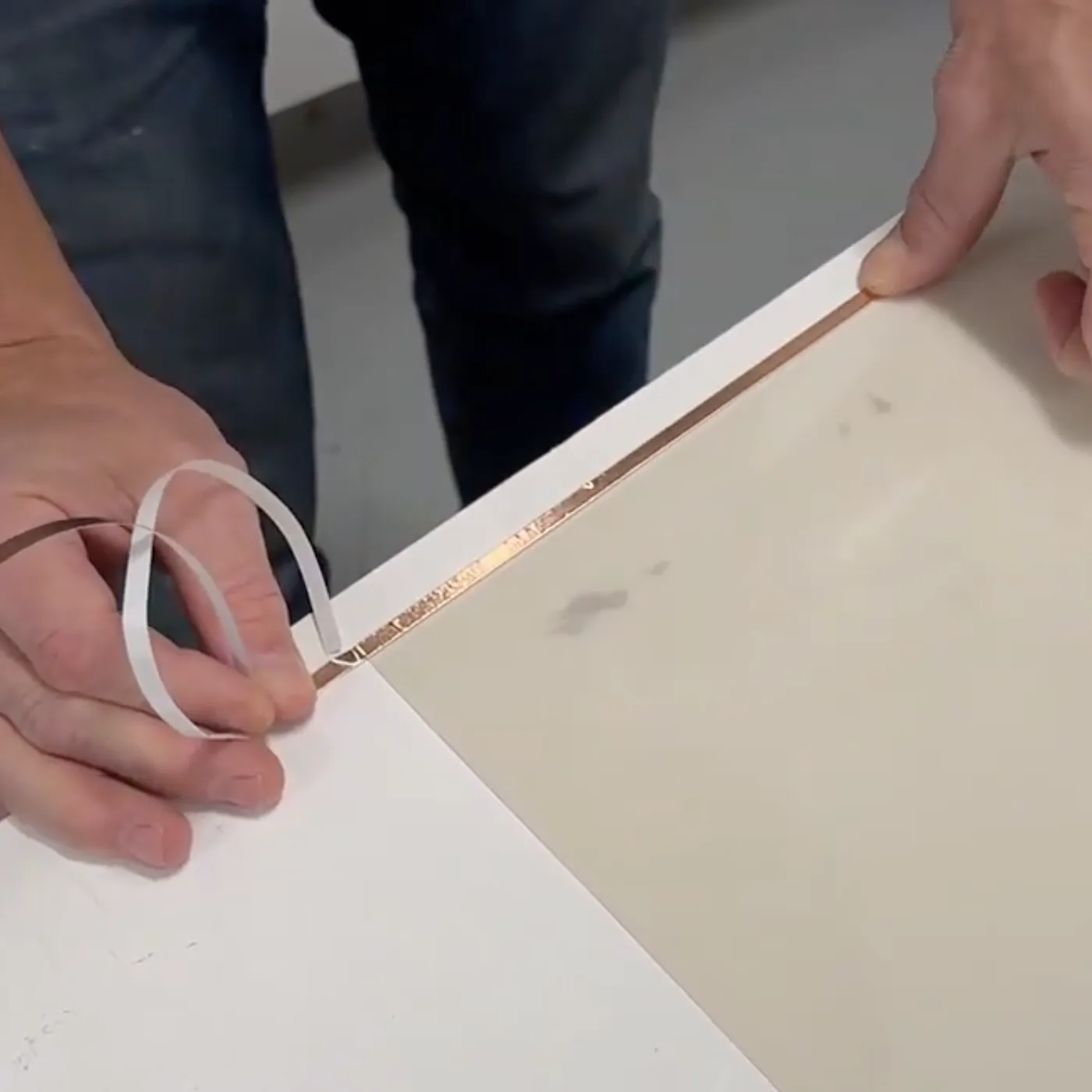
When film is ordered to size, Lumi Projekt can deliver it with the busbars already prepared and tested.
Installation step by step
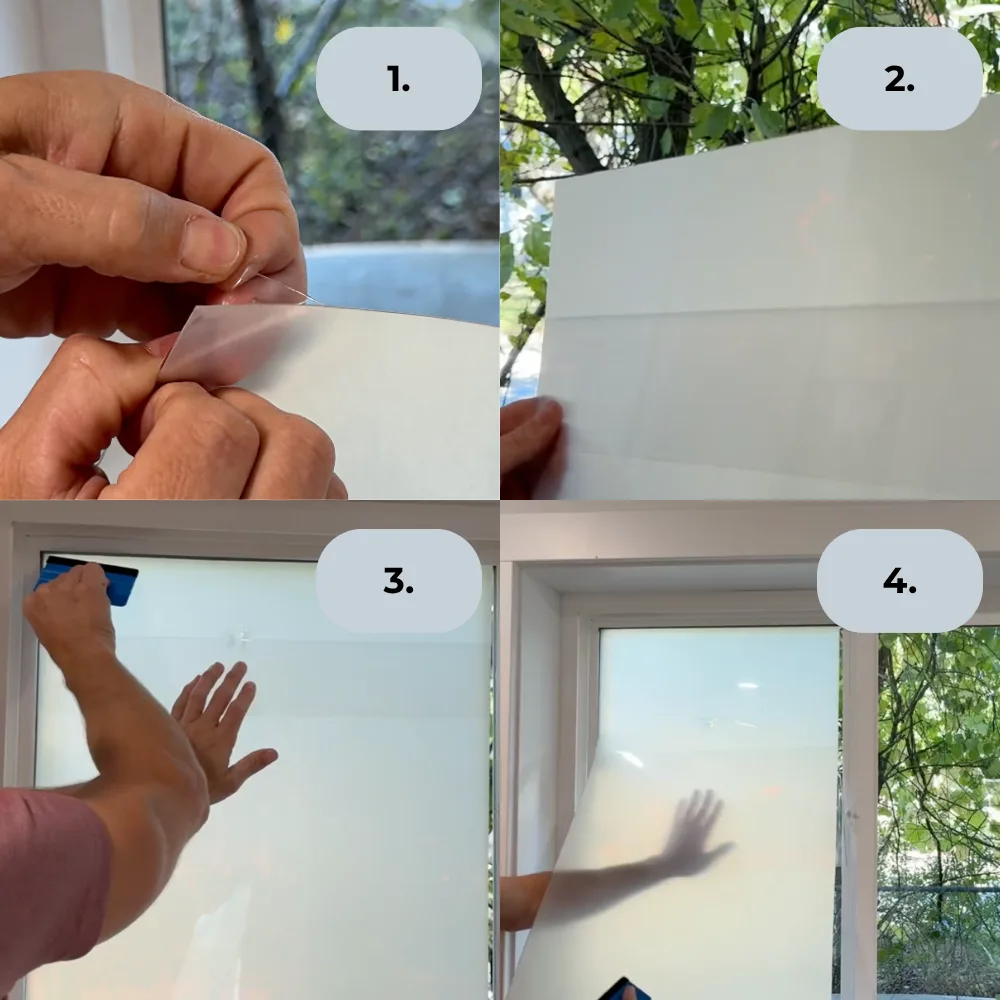
Installation is not complicated, but it requires a clean work area and careful application. The sequence is as follows:
- Inspect the film and busbars before applying it, and test them on the power supply.
- Thoroughly clean and dry the glass, free of dust and grease.
- Peel the protective liner from the adhesive side and carefully lay the film onto the glass.
- Press out air and any bubbles from the center towards the edges.
- Connect the film to the power supply and controller, then check that it works again.
- Protect the busbars and seal the edges of the film, because exposed busbars and poor edge sealing are the most common cause of failure.
Connection to 220 V mains voltage and preparation of the electrical installation is a job for an electrician. If you would rather not do it yourself, Lumi Projekt has a list of authorized installers.
Control

Home Assistant

Apple HomeKit

SmartThings
Remote
Wall switch
Smart film can be controlled in almost any way you like: through smart home systems (Home Assistant, Apple HomeKit, SmartThings), a mobile app, the remote control that comes with the power supply, or a wall switch wired in by an electrician.
Power supply table
Choosing a power supply depends on the total film area connected to the same supply. As a general rule, allow 5 W of power for every 1 m² of film.
| Model | Covered area | Price incl. VAT |
|---|---|---|
| 20W | 4 m² | €29.99 |
| 30W | 6 m² | €44.99 |
| 50W | 10 m² | €54.99 |
| 100W | 20 m² | €69.99 |
| 200W | 40 m² | €119.99 |
| 300W | 60 m² | €124.99 |
Frequently asked questions
What power supply do I need for smart film?
Allow 5 W for every m² of film. A 20 W power supply is enough for 4 m², 50 W for 10 m², 100 W for 20 m², and so on, according to the power supply table.
Where is PDLC smart film installation available?
Lumi Projekt installs smart film in Međimurje, Varaždin and Koprivnica-Križevci counties, as well as in the city of Zagreb and its surroundings. Installation in other areas is possible by arrangement, depending on distance and the complexity of the work. You can find an installer for your area on the Authorized installer list page, if one is available.
Can I install smart film myself?
Applying the film is not complicated, but it requires a clean work area and precision. Connection to mains voltage and the electrical installation must be done by a qualified electrician.
Can one power supply run several glass panels?
Yes, depending on the power rating of the power supply. All film on the same power supply switches at the same time, and with the right configuration separate controllers can be used.
How is smart film controlled?
With a remote control, a wall switch, a mobile app or through smart home systems such as Home Assistant, Apple HomeKit and SmartThings.
What if the film stops working?
The most common causes of failure are faulty busbars, poor edge sealing or a power interruption. With the self-adhesive version the busbars are easy to access, and power supplies follow the same standard, so they are simple to replace.
Need help with installation?
Contact our team or browse the list of authorized installers.